




What Andy Burnham's High Street Crackdown Means For The Gambling World
New Prime Minister Andy Burnham plans to ‘crack down’ on betting shops to clean up Britain’s high streets.
Burnham associated betting shops with ‘dodgy businesses’ and vape shops as contributing to a decline in the high street.
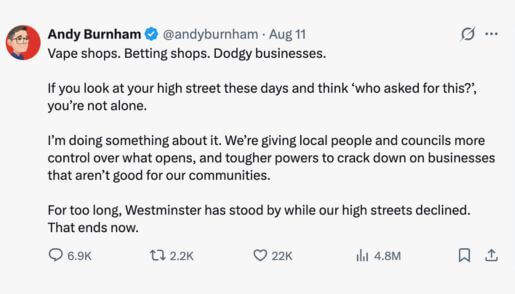
Burnham’s announcement comes about four months after Remote Gaming Duty on online gaming almost doubled, rising from 21% to 40% in April 2026.
The Betting and Gaming Council says the increase has affected operators’ integrated online and retail businesses, contributing to approximately 540 announced betting-shop closures and 4,500 job losses since the Budget.
What Changes is Andy Burnham Proposing?
Burnham announced councils would get new powers to block new betting shops and adult gaming centres (AGCs) – the venues that primarily offer gaming machines like fruit and slot machines, some of which operate for up to 24-hour access.
The proposals go out to a government consultation, with changes intended to take effect from the start of 2027.
- Plans to scrap “Aim to permit” (Section 153 of the Gambling Act 2005).
- New adult gaming centres in England would require planning permission, allowing councils to consider whether proposed venues are appropriate for their area.
- Gambling Commission figures show that betting shops are down by roughly a third since 2019 (8,320 then, 5,825 by 2025), while adult gaming centres have grown to 1,415 in 2025.
Sources: Primary GOV.UK announcement, Gambling Commission 2025
What Burnham announced
On the gambling side there are two measures. First, the government will scrap “aim to permit”. Second, new AGCs will have their own planning category so town halls can refuse them. That planning change is England only.
Prime Minister Andy Burnham said:
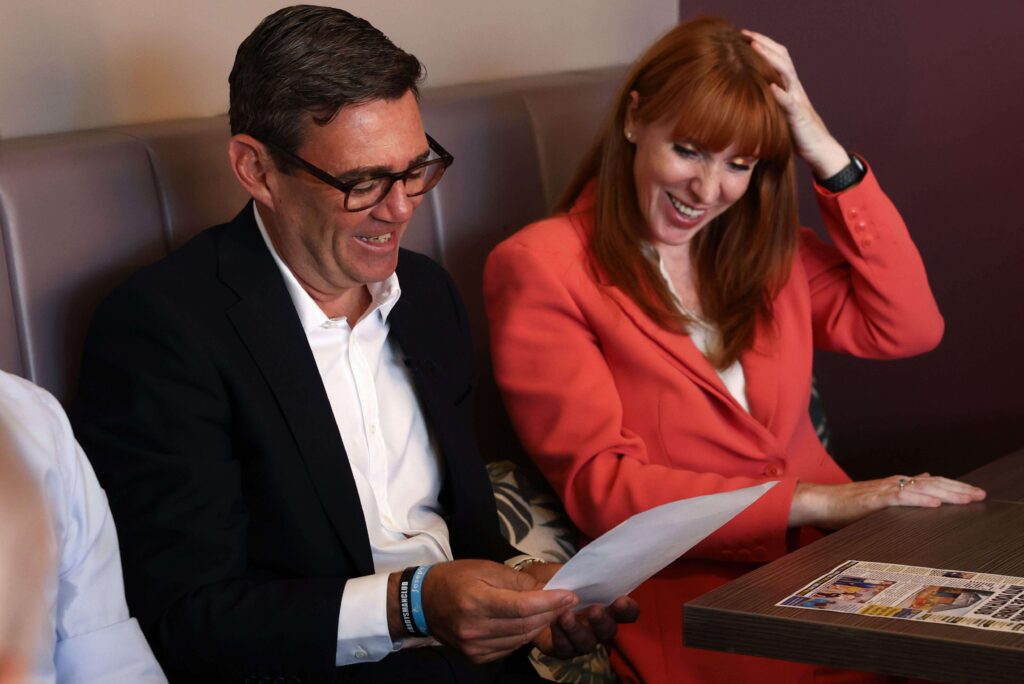
“For many people, the high streets they grew up with have been hollowed out and become unrecognisable over decades of decline. The rise of vape shops, betting shops and rogue operators have replaced the shops, services, and community spaces that people are crying out for.
“That’s not on. I said we would improve Britain’s high streets, and that’s exactly what we are starting to do. We’re putting communities back in control and giving local people a real say over what opens on their high street. Local councils will be given the powers they need to rein in unwanted shops and bring town centres back to life.”
What Is “aim to permit”?
Plans to Scrap Section 153, explained
Gambling Act Section 153 creates a presumption in favour of permitting gambling premises when an application complies with relevant codes, Gambling Commission guidance, licensing objectives and the council’s licensing policy. Local objections have limited influence unless they raise relevant licensing concerns.
Source: Gambling Commission Guidance
Without ‘aim to permit’, councils will get greater discretion on saying no to unwanted betting shops or AGCs.
There’s context worth knowing. Back in April 2026, the English Devolution and Community Empowerment Act added a Section 153A that gave councils Gambling Impact Assessments, a way to weigh how many gambling venues an area already has. That was the last government’s (Keir Starmer’s) answer to the same complaints. Scrapping the rule completely is Burnham’s move.
Key numbers taken into consideration
Betting shops tell one story. There were 8,320 across Great Britain in 2019; by 2025 the Gambling Commission counted 5,825, a fall of almost a third.
AGCs went the other way, climbing to 1,415 by 2025.
The Social Market Foundation’s October 2025 study, “High Streets at Stake”, tells the opposite story for AGCs: adult gaming centres grew 7% between 2022 and 2024, and about one in three now sits in the most deprived tenth of neighbourhoods in Great Britain. A follow-up SMF report in July 2026 estimated that harms from these machines cost the economy around 2.33 billion pounds each year. That growth is why the “spreading on our high streets” line lands more squarely on arcades than on betting shops, which are heading the other way.
Sources: Social Market Foundation 2025, Social Market Foundation 2026
What it means for the gambling sector
The Betting and Gaming Council pushed back on the framing, publishing the *following on 11 August 2026 on the BGC website:
“We support tough action against criminal operators and agree local people should have a proper say over their high streets. But the suggestion that betting shops are spreading unchecked is simply wrong.
“Betting shop numbers have fallen by over a third since 2019. Around 3,000 shops have closed and over 15,000 jobs have already been lost.
“It is wrong to lump highly regulated, licensed betting shops together with rogue or criminal businesses. Betting shops still support 37,500 jobs, bring vital footfall to neighbouring businesses and, for many customers, are valued community hubs.
“The real threat to Britain’s hard-pressed high streets is more empty units and fewer local jobs, not businesses rooted in the communities they serve.”
From the industry’s perspective, the tension concerns scope: declining betting-shop numbers are being discussed alongside the growth of AGCs.
*Betting & Gaming Council 11 August 2026
What it means for online bingo and casino players
Worth noting here that this is planning and licensing law for physical premises. If you play online bingo or online casino, nothing here changes how you play, what sites you can use, or the offers you see. What it does signal is political direction: a government more willing to treat land-based gambling as a high street harm to be managed. That’s worth watching, because the political approach around land-based machines tends to shape the wider debate over time. And whatever you play, if you want to take stock of your own habits, our responsible gambling guide has the tools and support to hand.
If you fancy a night out at a real venue, our guide to land-based casinos is a good place to start.
WhichBingo’s view

From Managing Editor Nic McBride
“Giving communities a real say over their own high streets is hard to argue with, and we see the negatives of adult gaming centres clustering in the poorest areas.
“At WhichBingo we are big proponents of responsible gambling and embrace any regulations that support that. We’d love to see the high street thrive and see the value of bingo as a social event.
“Improving the high street will require measures beyond regulating particular types of business, including addressing the wider cost-of-living crisis and inequality.”
“We have seen *growing regulatory concern about black-market casino sites and would not want any changes to push more people towards unlicensed operators.”
*Source: Betting & Gaming Council
What we’re watching
- The government consultation on the planning changes, and its timetable to a start-of-2027 commencement.
- How the “aim to permit” repeal sits alongside the new Gambling Impact Assessments from the 2026 devolution act.
- Whether Scotland and Wales follow, given the England-only planning elements. Scotland’s First Minister said he would “explore further steps”*.
- The parallel row over doubling Machine Games Duty* on higher-risk machines, which this week’s news runs alongside without resolving.
- The Betting and Gaming Council’s lobbying line on treating betting shops and adult gaming centres separately.
*Sources: BBC News Scotland, GOV.UK
Burnham's high street crackdown FAQs
What is the ‘aim to permit’ rule?
Under Section 153 of the Gambling Act 2005 (on the books since 2007), councils have had to grant a gambling premises licence as long as the application ticks the Gambling Commission’s boxes. They could attach conditions or say no only if an applicant fell short, not just because locals objected.
Will this stop new betting shops opening?
Not automatically. Scrapping “aim to permit” gives councils more room to refuse applications on local grounds. Each application is still decided case by case, so the effect depends on how councils use the power.
What is an adult gaming centre?
An adult gaming centre is an over-18 venue offering high street gaming machines, often with 24-hour access. There were 1,415 in Great Britain in 2025. Under the plans, new ones in England will need planning permission. An example is Merkur.
Will Burnham’s crackdown affect online bingo or online casino play?
No. Burnham is talking about planning and premises rules for land-based, high street gambling. Online bingo and online casino play are not touched by planning law.
When would the changes take effect?
The proposals go to a government consultation first, with changes intended to come into force from the start of 2027.






Reader comments