



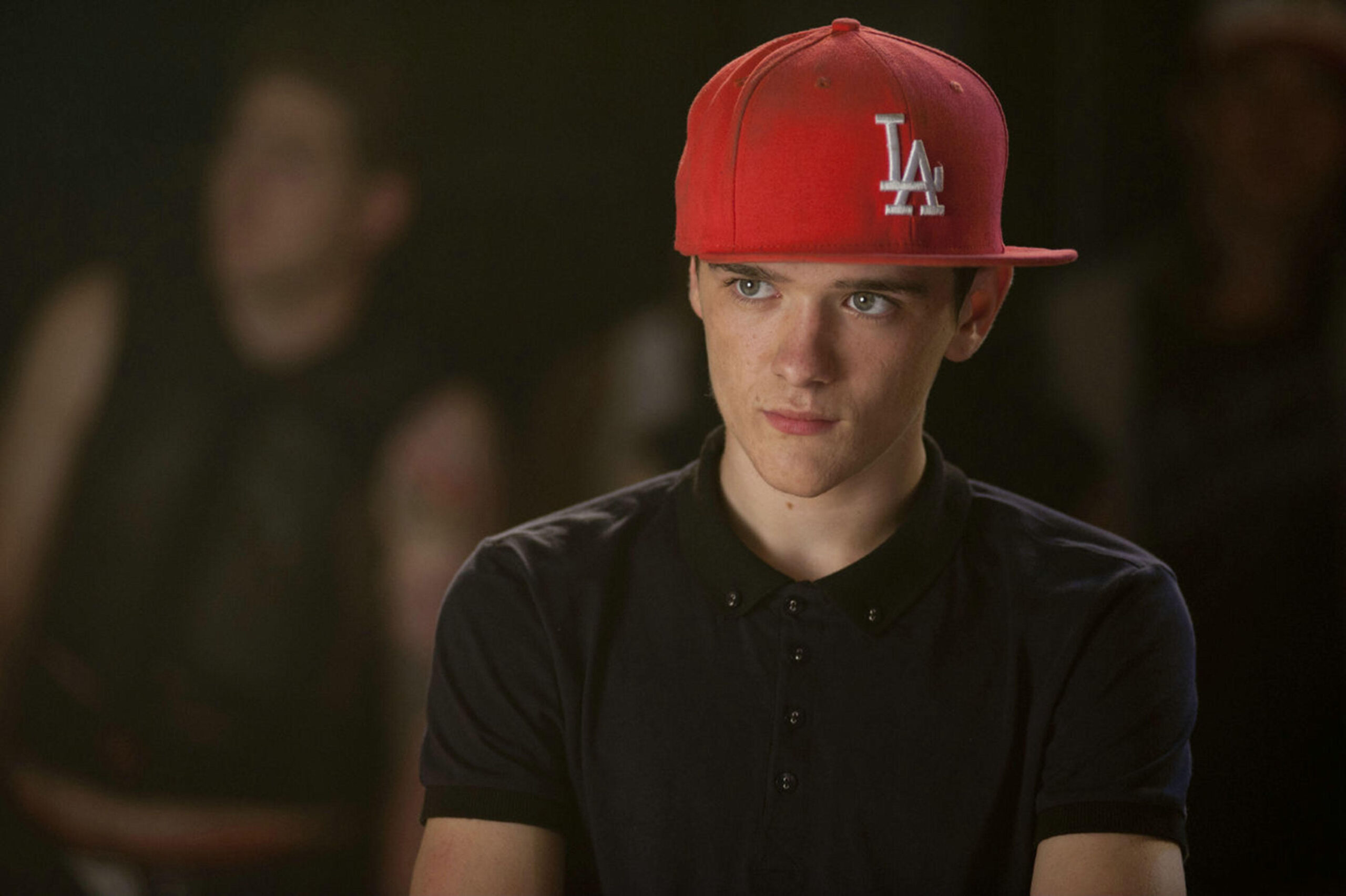
George Sampson on Britain's Got Talent, Handling Fame, and the Broken-Down Car That Got Him to LA
George Sampson won Britain’s Got Talent at 14 and became a household name overnight. But 18 years on, it’s not the rain dance on a Warrington street that defines him, it’s a troubled school kid from a BBC drama, a two-year theatre adventure that nearly didn’t happen, and a pivot into acting that began with a broken-down car in Doncaster.
We caught up with George to talk about all of it.
‘It Feels Like I’m Watching Somebody Else’
Eighteen years is a long time, and George is honest about how distant that night feels now.
“I don’t remember it, in terms of the actual moment. I can’t physically go back that far and relive it, partly because of how long it’s been, but partly because of how much of a blur it all was and how fast it happened. That moment happened just like that.
Everything changed in a split second of somebody shouting my name out. I have to watch it back to relive it, and even then it feels like I’m watching somebody else. It’s a little imposter syndrome thing.”
Looking back, though, he has no complaints. The career that followed, with all its ups and downs, is something he’s grateful for.
“I’ve been really blessed and really lucky with the work that’s come since, the experiences I’ve had, the people I’ve met and the places I’ve been.
It’s been hard as well, there have been lots of downs as much as there have been ups. The problem with this industry is that can all happen at the flick of a switch. You can have the worst time of your life and then get a job tomorrow and suddenly you’re everywhere again. It’s about managing how you feel through those in-between phases.
As I’ve got older, I’ve got much better at just dealing with it, cracking on and trying to be happy.”
READ MORE:
* Sherrie Hewson who talks about Loose Women and her enjoyment being in Benidorm
* Anthony Quinlan on Typecasting, Turning Down Big Brother and the Imposter Syndrome He Overcame
A Susan Boyle Moment Could Never Happen Now
George is thoughtful on the question of whether a talent show moment like his could happen in the social media age. His answer is candid, and not entirely hopeful.
“I think we live in an age, especially with TikTok and social media, where people have done everything for views. The idea of chasing clout, the likes, the viral moments — people have done it all.
You just get to a point where everything’s been done. I just don’t know if we could have a moment like that again. Not just my moment, but a Susan Boyle moment. I genuinely don’t think we can, because of how glued we are to our phones. You can swipe in 20 seconds and see that moment 45 times.”
The magic of Saturday night television in the mid-2000s, he says, was something specific to its era and irreplaceable.
“The beauty of it back then was that everybody went to work throughout the week, maybe watched the odd soap, and then came around the telly on a Saturday night and went: what was that? I’ve never seen that before. I don’t think we have that luxury anymore, and that’s just a sign of the times.
It’s not a Britain’s Got Talent thing, it’s just the world we live in now.”
He is also sceptical about the authenticity of some acts who arrive on the show already well established online.
“I’ve seen kids on TikTok doing the exact same thing on four different talent shows before they ever came to Britain’s Got Talent.
It’s hard to believe the ‘it’s always been my dream’ line when you’re Australian and you’ve already been doing really well online. It just makes it harder to believe in those moments.”
The Support Was There But It Left Him Unprepared for Life Without It
George is honest about what it was like to be thrust into the spotlight as a teenager, and what happened when the scaffolding was eventually taken away.
“I wasn’t given support in terms of how I should be dealing with things, but I was given a massive team of people around me.
The idea was to just put me in a bubble, surround me with people that know what they’re doing, and let them deal with everything. And they did do a good job of that. It got more difficult when I left my management and went on my own. I realised how much that support network dropped and it was like: I’m on my own now, what do I do?”
The transition was less about a dramatic fall and more about a quiet realisation that nobody had taught him how to do any of it independently.
“They didn’t feed me enough from that support so that I could do it on my own afterwards. They just took control and did a great job of it. But if I had come out knowing what I was doing because I’d been given that information along the way, I would have been okay. It was almost like learning again from scratch.”
Three Sisters, a Stage School and a Screen Test He Wasn’t Expecting to Pass
George’s path into acting was less a deliberate choice and more a series of accidents that kept pointing in the same direction.
“I’d always acted as a kid, I was always a stage school kid.
I had three sisters and that’s what they wanted to do, and because my single mum was working through the holidays, I got roped in with them. I ended up going to these stage summer schools and I hated it at first, but once I was there I thought: well, I’m here now, I may as well enjoy it. And I ended up getting quite good at it.”
The proper pivot came through a dance film written around his BGT success, an English answer to Step Up, with a part created specifically for him. They did a screen test almost as a formality.
“They did a screen test to see if I could act and they were like: oh, you can act. You should do acting. You’ve got this big opportunity in a dance film that’s going to do very well. So I was given an acting agent off the back of that and it all stemmed from there.
I just started getting auditions and started landing roles. I was thrown in the deep end, but I learnt my craft doing the job — I’d never been to any performing arts school other than Saturday stage schools, never gone to college. But that’s the best way to learn.”
Waterloo Road — More Famous Than Britain’s Got Talent
Ask George what he’s most recognised for today and the answer might surprise you.
“The Kyle Stack stuff is what I’m predominantly most known for now. I see it every single day, I go live every single night and stream of an evening, sometimes to a hundred thousand people, and it’s all Waterloo Road. Because the show’s still going and it’s still fresh, people go back and re-watch the old series.
People tell me about Britain’s Got Talent and they recognise me from that, but I’m telling you, it’s not even on the same level. It’s Waterloo Road. Without a doubt.”
A Broken-Down Car in Doncaster and the Job That Changed Everything
Of all the roles George has played, Everybody’s Talking About Jamie holds a particular place and the story of how he got it is one of those genuinely improbable tales the industry occasionally throws up.
“I remember auditioning for it when it first came around. It was only in Sheffield at the time and there were whispers it was going to transfer to the West End. It came down to the last two and the other guy got it. Then, weirdly, my cousin who’s a dancer had got a job on the film. He was filming in Doncaster and his car broke down. He called me and asked me to come pick him up. I had nothing on that day, so I drove out to Doncaster.
While I was there I saw Kate, the choreographer for the film, who was also the choreographer for the show.
I went over, had a chat, mentioned I’d love to get seen for the tour and because they’d already seen me and liked me, I got a call three days later offering me the job.”
Everything happens for a reason — it’s a phrase George returns to often, and this moment is the clearest illustration of why.
The tour itself was everything he’d hoped until Covid shut the entire theatre industry down just two months in. The 18 months that followed were, he says, a period of total uncertainty.
“The theatre industry was the first to close and the last to open. There were 18 months of nothing, people started dropping out, it was all a bit chaotic and up in the air.”
When the tour finally resumed, a further twist arrived. An announcement that the show would transfer to LA meant the tour cast and the West End cast would merge into one and there was only room for one Dean.
“There was real pressure: is it me or is it the other Dean? Thankfully I got it.
We went to LA, and they actually took a lot of our kids too because we had a really strong group. Even that was bittersweet in a way, because we had to come back to the tour afterwards with our old cast so there were people who hadn’t gone to LA that we had to come back and face. But that whole experience from start to finish, if you don’t count the 18 months in the middle of not knowing what was going on, was a good two years of my life. What a job. It’s definitely up there.”
More News:

 15min
15min 
 15min
15min  17min
17min  16min
16min 





Reader comments