



Poker Hands Ranked: The Complete List from Royal Flush to High Card


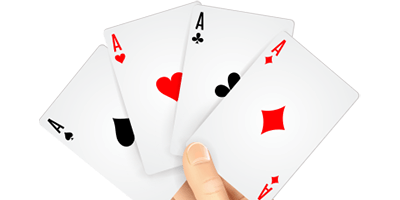
Poker hand rankings are the one thing that stays the same in every version of the game, from Texas Hold’em to draw poker, online or in a land-based casino. When you’re ready to practise, our guide to online poker sites covers the UK casinos we recommend for poker.
Best Poker Casino Sites

18+ | Offer is available to new customers who register via the promo code CASAFS. Winnings are paid in cash. Free spins valued at 10p. Get an additional 100 free spins when you deposit and spend £10 on eligible games. Full T&Cs apply. #ad

18+. New players. Min deposit £25. Up to 140 Free Spins (20/day for 7 consecutive days on selected games). Manually claimed daily or expire at midnight with no rollover. Free spin value £0.10. Max winnings £100/day as bonus funds with 10x wagering requirement to be completed within 7 days. Game restrictions apply. Play Responsibly! www.begambleaware.org Full T&Cs apply.

New members only, must opt in. Not valid with other Welcome Offer(s). Min £10 deposit & £10 wager on slots game(s). 30 day expiry from deposit. Free Spins: on MONOPOLY Cash Is King. 1p coin size, 10 lines. Play Responsibly. GambleAware.org. 18+#AD

Automatically credited upon deposit. Cancellation can be requested. First Deposit Only. Min. deposit: £10, max. Bonus £25. Maximum amount of Free Spins is 100. Game: Book of Dead, Spin Value: £0.1. WR of 10x Bonus amount and Free Spin winnings amount (only Slots count) within 30 days. Max bet is 10% (min £0.10) of the free spin winnings and bonus amount or £5 (lowest amount applies). Spins must be used and/or Bonus must be claimed before using deposited funds. Bonuses do not prevent withdrawing deposit balance. Bonus Policy applies. Full T&Cs Apply.

New Players Only. Wager from real balance first. 10X wager the bonus money within 30 days, and 10x wager any winnings from the free spins within 7 days. Contribution varies per game. Available on selected games only. Wager calculated on bonus bets only. Bonus offer and any winnings from the offer are valid for 30 days / Free spins and any winnings from the free spins are valid for 7 days from receipt. Max conversion: 1 time the bonus amount or from free spins: £20. Limited to 5 brands within the network. Withdrawal requests void all active/pending bonuses. Excluded Skrill and Neteller deposits. Full Terms apply
What are Poker Hands?
A poker hand is defined as the combination of cards you are able, or choose, to play. This may consist solely of the cards you are holding, it may be the best five card combination you can make out of seven cards (as in 7 card stud), or it may be a mix of your own cards and communal cards, as in Texas Hold’em.
In Texas Hold’em the aim is to make the best possible poker hand using either:
- your two hole cards (the cards you’re dealt and which remain hidden) and three of the five communal cards
- one of your hole cards and four of the five communal cards
- neither of your hole cards and all five communal cards
Poker Hands Ranked From Best to Worst
The ten different poker hands are listed below, in order of precedence. Each hand will beat the hands below and lose to the hands listed above it.
It is essential to know the hands and their ranking order, as this has a significant bearing on how you play each round of the game, and will influence your betting strategy as well.
- Royal Flush (A-K-Q-J-10, all the same suit e.g., A♥-K♥-Q♥-J♥-10♥)
- Straight Flush (five consecutive cards, all the same suit e.g., 8♣-7♣-6♣-5♣-4♣)
- Four-of-a-Kind (four cards of the same value e.g., A-A-A-A)
- Full House (three-of-a-kind, plus 1 pair e.g., A-A-A-8-8)
- Flush (all the same suit e.g., A♣-10♣-8♣-4♣-2♣ )
- Straight (five consecutive cards, unsuited e.g., 6♣-5♠-4♦-3♣-2♥)
- Three-of-a-kind (three cards of the same value such as 5-5-5)
- Two-pair (e.g., 10-10 and 3-3)
- Pair (any pair, e.g., 2-2)
- High card (a hand with none of the above combinations)
Some guides count a Royal Flush as the highest straight flush, which makes nine hands instead of ten. It doesn’t change who wins, so we’ve listed it separately here.
Quick-reference chart
| Rank | Hand | What it is | Example |
| 1 | Royal Flush | A-K-Q-J-10, all the same suit | A♥-K♥-Q♥-J♥-10♥ |
| 2 | Straight Flush | Five consecutive cards, all the same suit | 8♣-7♣-6♣-5♣-4♣ |
| 3 | Four-of-a-Kind | Four cards of the same value | A♠-A♣-A♦-A♥-K♣ |
| 4 | Full House | Three-of-a-kind plus a pair | A-A-A-8-8 |
| 5 | Flush | Five cards of the same suit, not in sequence | A♣-10♣-8♣-4♣-2♣ |
| 6 | Straight | Five consecutive cards, mixed suits | 6♣-5♠-4♦-3♣-2♥ |
| 7 | Three-of-a-Kind | Three cards of the same value | 5-5-5-K-9 |
| 8 | Two Pair | Two different pairs | 10-10-3-3-7 |
| 9 | One Pair | Two cards of the same value | 2-2-K-9-5 |
| 10 | High Card | None of the above | A-J-8-6-3 (mixed suits) |
Royal Flush
A Royal Flush is the best possible hand in poker, and beats everything else. It consists of the top five cards, A-K-Q-J-10, in the same suit, e.g., A♥-K♥-Q♥-J♥-10♥.
Straight Flush
A straight flush consists of five suited cards in sequence. It will beat every other hand except a Royal Flush, which is simply the highest straight flush possible.
If more than one player has a straight flush, the sequence with the highest card wins, e.g. 8♣-7♣-6♣-5♣-4♣ will beat 6♦-5♦-4♦-3♦-2♦.
Four-of-a-Kind
Four-of-a-kind means that you are holding all four of a particular card, e.g., A♠-A♣-A♦-A♥, and is the third highest ranking hand.
If more than one player has four-of-a-kind, the highest card will win, e.g., 8♠-8♣-8♦-8♥ will beat 7♠-7♣-7♦-7♥.
Full House
A full house consists of a three-of-a-kind and one pair, e.g., 8-8-8-3-3. The relative strength of a full house is based on the three-of-a-kind, rather than the pair. This means, for instance, that K-K-K-2-2 would beat Q-Q-Q-A-A.
Flush
A flush is five suited cards, not in sequence, e.g., 10♣-8♣-6♣-4♣-2♣. It beats a straight because it’s harder to make.
If more than one player has a flush, the highest card will win, e.g., J♣-9♣-8♣-5♣-2♣ will beat 10♥-9♥-8♥-5♥-2♥.
Straight
A straight is five unsuited cards in sequence e.g., 6♣-5♠-4♦-3♣-2♥.
If more than one player has a straight, the highest value card will win, e.g., 7♣-6♠-5♦-4♣-3♥ will beat 6♣-5♠-4♦-3♣-2♥.
Three-of-a-Kind
Three-of-a-kind is three cards of the same value, e.g., 6-6-6. If more than one player has three-of-a-kind, the highest value cards will win, e.g., 6-6-6 will beat 5-5-5.
Two Pair
Two-pair is two pairs of cards of equal value, e.g., 10-10-3-3. If more than one player has two pair, the highest value top pair will win, e.g., 10-10-3-3 will beat 9-9-8-8.
If two players have the same two pair, the winner will be the player with highest value fifth card (the ‘kicker’). This means that 10-10-3-3-7 will beat 10-10-3-3-6.
One Pair
One pair is two cards of the same value, e.g., 10-10. When more than one player has one pair, the winner is determined by the highest value, non-paired card (the ‘kicker’). If this is the same, the next highest value card will determine the winner, and so on.
This means that 10-10-7-5-4 would beat 10-10-7-5-3.
High Card
High card is the term used when none of the hands above can be made. In a showdown between two players without a recognisable hand, the high card will win. If they have the same high card, the winner will be determined by who has the next highest value card, and so on.
This means that Q-10-7-6-3 would beat Q-10-7-6-2.
When you’re ready to see how hands play out round by round, our guide to how to play poker covers the rules, the betting rounds and the most popular variations.
Poker Hand Odds: How Likely Is Each Hand?
The rarer a hand is, the higher it ranks. There are 2,598,960 possible five-card hands, and the table below shows how many of them make each type of hand and how often you can expect to see one.
Hand | Five-card combinations | Five-card probability | Five-card odds (1 in) | Seven-card probability | Seven-card odds (1 in) |
| Royal Flush | 4 | 0.0002% | 649,740 | 0.0032% | 30,940 |
| Straight Flush (excl. Royal) | 36 | 0.0014% | 72,193 | 0.0279% | 3,591 |
| Four-of-a-Kind | 624 | 0.0240% | 4,165 | 0.1681% | 595 |
| Full House | 3,744 | 0.1441% | 694 | 2.5961% | 38.5 |
| Flush | 5,108 | 0.1965% | 509 | 3.0255% | 33.1 |
| Straight | 10,200 | 0.3925% | 255 | 4.6194% | 21.6 |
| Three-of-a-Kind | 54,912 | 2.1128% | 47.3 | 4.8299% | 20.7 |
| Two Pair | 123,552 | 4.7539% | 21.0 | 23.4955% | 4.3 |
| One Pair | 1,098,240 | 42.2569% | 2.4 | 43.8225% | 2.3 |
| High Card | 1,302,540 | 50.1177% | 2.0 | 17.4119% | 5.7 |
| Total | 2,598,960 | 100% | 100% |
A Royal Flush is the rarest of them all. Only four of those 2,598,960 five-card hands are Royal Flushes (one for each suit), which works out at about 1 in 649,740. In Texas Hold’em, where you pick the best five cards from seven, the odds improve to about 1 in 30,940, which is still very long.
At the other end of the scale, one pair and high card between them make up more than nine in ten five-card hands. That’s why two pair is a hand worth keeping.
If you’d like to see these hands in action without playing against other people, video poker uses the same hand rankings. You’re dealt five cards, keep the ones you want and draw replacements, and the pay table rewards the rarer hands with bigger payouts.
Poker Hand Tie-Breakers: Kickers, Suits and Split Pots
Two players can finish with the same type of hand, so poker has four simple rules to decide who wins.
Check the kicker. If two players both have one pair, the higher pair wins. If the pairs match, the highest card outside the pair, known as the kicker, decides it. Say the board is A♦-7♣-4♥-2♠-9♦, and you hold A♠-K♦ while another player holds A♣-Q♥. You both have a pair of aces, but your king kicker beats their queen.
Suits don’t break ties. In Texas Hold’em, no suit is worth more than another, so two identical hands split the pot. Suit order only matters in a few situations, such as 7 Card Stud, where it decides who has to open the betting if the lowest upcards match (clubs rank lowest, then diamonds, hearts and spades).
When the board plays. Sometimes the best five-card hand is made up entirely of the communal cards. If none of the players can improve on it with their hole cards, everyone still in the hand splits the pot.
The ace works both ways in a straight. It can be high (10-J-Q-K-A) or low (A-2-3-4-5), but it can’t wrap around, so Q-K-A-2-3 isn’t a straight. The lowest straight, A-2-3-4-5, is sometimes called the wheel, and it loses to every other straight.
Common Poker Hand Mistakes Beginners Make
These six slip-ups catch out most new players.
Mixing up the middle of the ranking. A full house beats a flush, and a flush beats a straight. If you’re ever unsure, remember that the rarer the hand, the higher it ranks.
Forgetting the kicker. Two players can both have a pair of aces, and it’s the remaining cards that decide who wins. Check them before you assume you’ve won.
Thinking suits matter in a tie. A flush in hearts doesn’t beat a flush in spades if the ranks are identical. The pot is split.
Miscounting straights with the ace. A-2-3-4-5 and 10-J-Q-K-A are both straights, but Q-K-A-2-3 isn’t.
Overlooking what’s on the board. In Texas Hold’em, everyone shares the communal cards. If four hearts are showing and you hold a low heart, a player with the ace of hearts will have a better flush.
Treating a good starting hand as a winning hand. A pair of aces is the strongest two cards you can be dealt, but it’s still just one pair until the community cards arrive.
Best Starting Hands in Texas Hold’em
In Texas Hold’em you begin with just two hole cards, so starting hands have a pecking order of their own. The strongest are:
- A-A (a pair of aces)
- K-K (a pair of kings)
- Q-Q (a pair of queens)
- A-K suited (an ace and a king in the same suit)
- J-J (a pair of jacks)
Hands such as A-Q suited, K-Q suited, 10-10 and A-K in different suits come next. How you play any of them depends on your position at the table, how many players are in the hand and how much has been bet. Even a pair of aces can lose. Once you know which hands are worth playing, our poker strategy guide covers position, odds and how to adjust as a hand develops.
Understanding Hand Strength
Relative hand strength is everything in poker, but in a game like Texas Hold’em, where it can take time for a hand to emerge, the most skillful players are those who recognise which hands are worthwhile waiting to try and hit, and those that are less likely so that it makes more sense to fold.
Often, the potential value of a hand will also be determined by how many players are participating in a round of betting, and your position on the table.
Common Poker Hand Scenarios
A very simplified example of how hand strength operates can be demonstrated as follows.
You are the big blind in a game of Texas Hold’em, and have been dealt 7♠-5♠. This means you could potentially hit a straight flush, a flush or a straight, but at this stage it is not an especially strong hand and you would need a lot to go your way in order to win.
Your decision as to what you do next, however, will in large part be determined by what the other players do, as this will give you an indication of the strength of your hand in comparison to others.
For instance, if there are several players who call but do not raise, it would make sense to stay in the hand; as you are the big blind, it will cost you nothing to see the flop, and with several players in the hand, there is the potential for a big pot. No raises also suggest no other player has a particularly strong hand at this stage, and so is waiting to see a flop before committing too much of their stack.
On the other hand, if one or two players both raise significantly, this would mean that even as the big blind you are going to have to bet to stay in the round, and all of a sudden, your 7♠-5♠ does not look as strong. Even if you paired either card on the flop, or even made three-of-a-kind, they are relatively low value cards, and likely to not be in contention given that players have raised on the strength of their hole cards. Most players in this scenario would fold.
If you decided to stay in the hand, and the flop came A♠-6♥-8♣, your odds of hitting a straight flush or flush have diminished, but the straight is still a good chance. Again, however, the actions of the other players, and how much it will cost you to see the turn card, will go some way to indicating the strength of your hand.
With a A♠-6♥-8♣ flop, anyone who bets big or raises is trying to represent that they have at least one A, giving them the top pair, or even three-of-a-kind. If this is the case, your 7♠-5♠ would be behind and it would probably make more sense to fold.
However, if no-one makes a big move, it might suggest the other players are still trying to hit a hand, and so you could risk it to stay in and see the turn card. Ultimately, the relative strength of the 7♠-5♠ is determined by your perception of what other players have in the hole.
However, there are times when the strength of your hand is more obvious, e.g., you are dealt A♠-A♥.
At this stage, you have the best possible hand (the nuts); however, there are different ways of playing it. You might want to make a sizeable bet, or raise another’s bet, so that it will cost anyone else with a strong hand, e.g., K♠-K♥, a good amount to see a flop, thus rapidly growing the pot.
However, the risk is that if you bet too much and represent too strong a hand, others may take you at your word, assume your strength and fold, meaning you can’t capitalise on an excellent hand.
The alternative approach might be to slow play, i.e., to bet moderately or simply call any other bets rather than raise, to suggest that your hand is not especially strong. The danger in this is that the flop comes K♦︎-2♥-7♣, for instance, and so the player with K♠-K♥ in the hole has hit three-of-a-kind, while you still only have your pair. In this scenario, you have let another player get in front and may not be able to capitalise in your initially stronger hand.
These two brief, simple examples demonstrate that poker hand strength is not fixed in stone. Rather, it is fluid and depends on a range of circumstances, such as what other players do and how the board (the communal cards) evolves.
Where to Practise Poker Online
Once you know your hands, a few practice rounds will help them stick. Some of the online casino sites we recommend include poker alongside slots and table games, including live dealer and multiplayer tables.
Before you play for real money, it helps to know how you’ll fund your account. Our guide to deposit methods compares the options at UK casinos, so you can choose one that suits you.
If you’d like a place to start, MONOPOLY Casino is on our current poker list, and our review covers its live poker games and some multiplayer poker tournaments alongside slots and table games.
Poker mixes skill and luck, and no hand or strategy guarantees a win, so only play with money you can afford to lose. Players must be 18 or over.
For tips on staying in control while you play, take a look at our safer gambling guide.
Poker Hands FAQs
What is the highest hand in poker?
The highest hand in poker is a royal flush. This consists of the top five cards — A-K-Q-J-10 — in the same suit, e.g., A♥-K♥-Q♥-J♥-10♥, and beats every other hand.
What is a royal flush in poker?
A royal flush is when you hit the top five cards, all in the same suit, e.g., A♠-K♠-Q♠-J♠-10♠.
What is the lowest hand in poker?
The lowest hand in poker is called high card, which means no conventional poker hands can be made. In this case, if there is more than one player in a player in showdown, the one with the highest value high card determines which hand wins, e.g., Q-10-7-6-3 would beat J-10-7-6-3.
What beats what in poker?
The ranking of poker hands is as follows, with each hand in the list able to beat the hands below it:
1. Royal Flush
2. Straight Flus
3. Four-of-a-Kind
4. Full House
5. Flush
6. Straight
7. Three-of-a-kind
8. Two-pair
9. Pair
10. High card
Is a flush better than a straight in poker?
Yes. A flush (five cards of the same suit) beats a straight (five cards in sequence). Flushes rank higher because they’re harder to make. Only 5,108 of the 2,598,960 possible five-card hands are flushes, compared with 10,200 straights (not counting straight flushes in either case).
What are the odds of getting a Royal Flush?
In a five-card hand, the odds of a Royal Flush are about 1 in 649,740, as only four of the 2,598,960 possible hands (one for each suit) are Royal Flushes. In Texas Hold’em, where you make the best five cards from seven, the odds improve to about 1 in 30,940.
How many different poker hands are there?
There are ten ranked poker hands, from Royal Flush down to High Card. Some guides count a Royal Flush as a straight flush, which makes nine. Between them, the ten hands cover 2,598,960 possible five-card combinations, which add up to 7,462 distinct hand strengths once you treat all suits as equal.
Is ace 2 3 4 5 a straight?
In most online poker games, A can be high or low, meaning A-K-Q-J-10 is counted as a straight, as is A-2-3-4-5.
It is important, however, before sitting down to play, that you ascertain for sure whether A is high and low, as in some games it isn’t and so could cause you to make an expensive mistake!
What are the best poker hands to start with?
When you are playing Texas Hold’em, having a high pair, or suited cards in sequence, are the strongest cards to have in the hole. However, as discussed above, the relative strength will depend on your position on the table, what other players are doing, and the size of your stack, among other factors.
What is the slang best hand in poker?
It is generally accepted poker parlance that the best cards in any given hand are referred to as ‘the nuts.’